Exclusive insights for VIP owners and Rockstar investors
By Dawn Johnson December 18, 2025
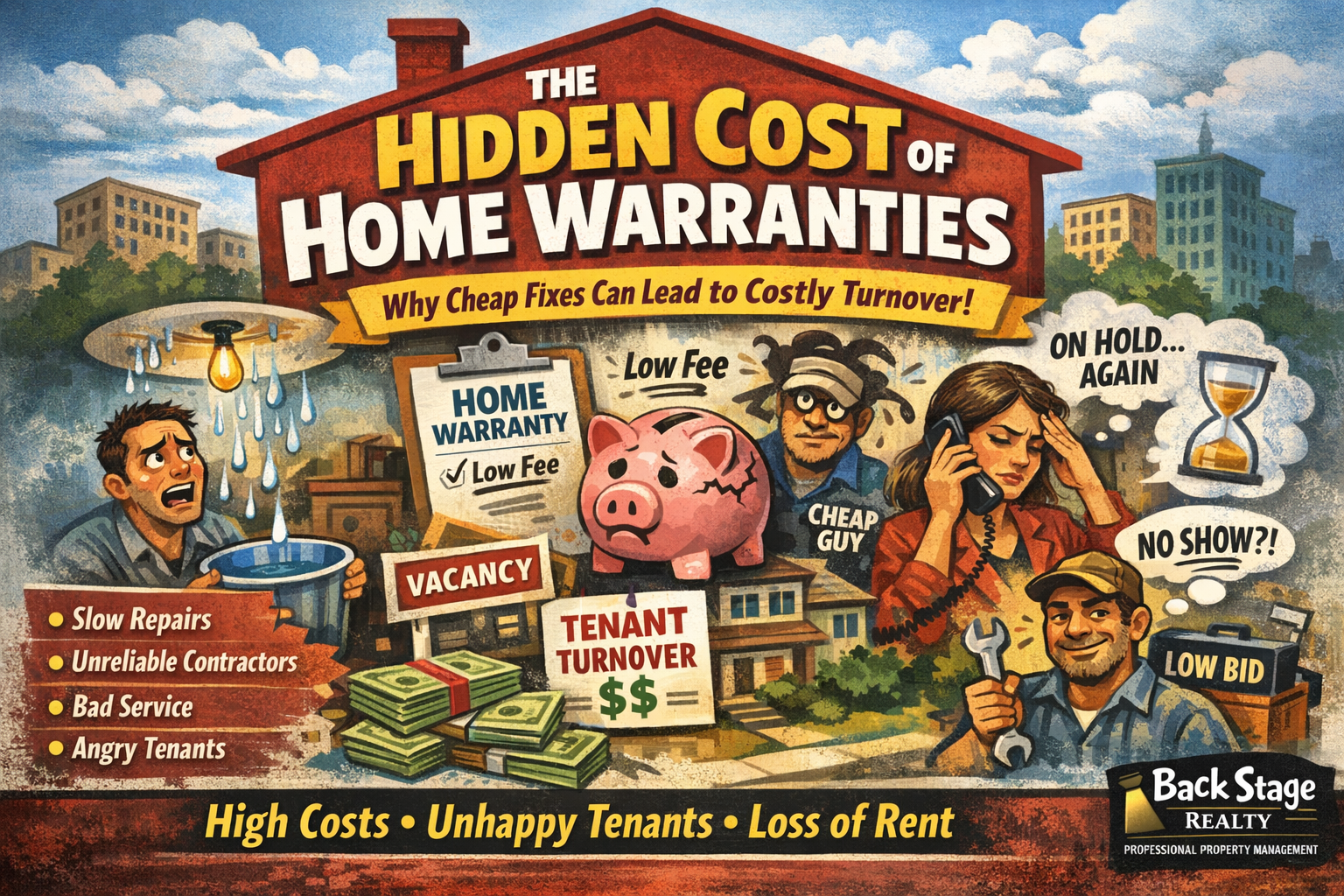
On paper, a home warranty sounds like a dream... “Low monthly cost.” “Covered repairs.” “Peace of mind.” What rental property owner wouldn’t want that? But in the real world — especially in long-term rental property management — home warranties often turn out to be one of the most expensive ‘cheap’ decisions an owner can make . Let’s pull back the curtain. The Sticker Price Is Just the Beginning Most home warranties cost anywhere from $600–$900 per year , plus a service call fee (often $75–$125 per visit). That alone surprises many owners. But the real cost doesn’t show up neatly on a receipt. It shows up in: Tenant frustration Delayed repairs Repeated service calls Higher turnover Lost rent Management inefficiency In other words… death by a thousand paper cuts. The Contractor Problem No One Talks About Home warranty companies don’t use your trusted local vendors. They use contractors willing to accept extremely low payouts — sometimes less than what a reputable company charges just to show up. That usually means: New or inexperienced technicians Overloaded schedules Minimal incentive to fix the issue correctly the first time Temporary or patchwork repairs Great contractors don’t need to accept bargain-basement pricing — and most won’t. The Customer Service Black Hole If you’ve ever called a home warranty company, you know the drill: 🎶 Hold music. ⏳ Long wait times. 🔁 Transferred again. Now imagine doing that multiple times , for multiple properties , while tenants wait. Most property management companies face a tough choice: Sit on hold for hours (time = money), or Bill the owner for the additional administrative time required to chase updates Either way — someone pays. And it’s usually the owner. Communication Breakdown (With Real Consequences) One of the most consistent problems with home warranty claims is poor communication : Tenant contact info not passed to the contractor Contractors not scheduling directly with residents Missed appointments “We tried to call” when no call was made No updates provided to management or ownership From the tenant’s perspective, it feels like no one cares . And perception matters. The Biggest Cost: Tenant Experience & Turnover Here’s the part most owners never see — but property managers do. When tenants are surveyed, home warranty service calls consistently receive the lowest satisfaction scores . Why that matters: The #1 reason tenants move within the same geographic area is poor maintenance experience — not rent increases. That includes: Slow repairs Repeated visits for the same issue Unprofessional contractors Feeling dismissed or inconvenienced A bad repair experience doesn’t just annoy tenants — it plants the seed to leave . Turnover Is Expensive (Very Expensive) One tenant moving out can easily cost: 1–2 months of lost rent Marketing & leasing costs Cleaning & turnover repairs Utility bills during vacancy Wear-and-tear accelerated by vacancy cycles Suddenly, that “affordable” home warranty has contributed to thousands of dollars in indirect losses . That’s the hidden cost. What Works Better Than a Home Warranty? A smarter strategy focuses on prevention, preparation, and professionalism . 1. Preventative Maintenance (The Unsexy Hero) A good property manager doesn’t wait for things to break. They: Change filters on schedule Flush HVAC drain lines Inspect water heaters Monitor roof and plumbing red flags Address small issues before they become emergencies This alone can add years of life to major systems. 2. Trusted, Local Vendors Local vendors care about: Their reputation Repeat business Doing the job right They communicate better, show up when scheduled, and stand behind their work. Tenants notice. 3. The “Rainy Day” Fund (Your Secret Weapon) Instead of paying hundreds each year to a warranty company, set aside 2–3 months of rent in a dedicated maintenance reserve. This fund: Covers unexpected repairs Softens the blow of vacancies Prepares you for larger ticket replacements Keeps you in control No approvals. No call centers. No delays. 4. Planning for Major Systems (Yes, There’s a Timeline) Here’s a realistic snapshot of common home systems: HVAC: 12–15 years (longer with maintenance) Water Heater: 8–12 years Roof (shingle): 15–20 years Appliances: 7–12 years Plumbing Fixtures: 10–20 years A knowledgeable property manager can review the age and condition of these systems and help you plan ahead , instead of reacting under pressure. The Bottom Line Home warranties promise peace of mind. But for rental properties, they often deliver: Slower repairs Poor tenant experience Higher turnover Hidden costs that quietly erode returns The best investment you can make isn’t a warranty. It’s good management . Ready for a Better Approach? At Back Stage Realty , we believe great property management isn’t about cutting corners — it’s about protecting your asset, your income, and your tenant relationships . We: Prioritize preventative maintenance Use reliable, local vendors Communicate clearly with tenants and owners Help you plan for future expenses Focus on long-term returns, not short-term fixes 📞 Call us at 850-729-0399 🌐 Learn more at www.RentwithBSR.com Let’s stop paying for problems — and start managing smarter.
By Dawn Johnson November 10, 2025
The State of the Rental Market: Comparing Late 2024 to Late 2025
By Appfolio Websites March 12, 2019
You may think that all locks are the same, but they aren’t. And no one knows this better than professional burglars. That’s why making sure you choose only high quality locks to protect your personal items is of utmost importance. Having a blog on your website is a way to increase engagement with your website visitors. Once you get the hang of it, blogging can also be a productive break from your regular routine. Here are the top 4 reasons for having a blog on your website. There are, of course, many more reasons why blogging is great. We’re just saving those for an upcoming blog...

Few things are as important as your personal security. This goes beyond your front door, and effects every element of your life. Discover the key factors for ensuring a safe life for you and your family.

Having a blog on your website is a way to increase engagement with your website visitors. Once you get the hang of it, blogging can also be a productive break from your regular routine.

Here are the top 4 reasons for having a blog on your website. There are, of course, many more reasons why blogging is great. We’re just saving those for an upcoming blog...

1. Blogs help drive traffic to your site.

Regardless of what your site is all about, you surely want people to visit it. After all, that’s why you spent so much time building it. When you enrich your site with a blog, you add additional dimension to the blog, a place that you can update regularly and keep in contact with your visitors. Having a blog also increases the number of indexed pages in your site. Every blog you add brings another indexed page to the site. The more pages you have, the more opportunities there are that your website will show up in search engines.

2. Blogs help convert traffic into leads.

If you convince people that they need your product or service through your blog, you’ll be transforming that fantastic traffic you brought (see above) into potential customers. You could use your blog to promote webinars, distribute ebooks & white papers or invite people to answer a survey. At the end of the day, your blog can ensure that visitors get value for their visit.

3. You establish authority.

When people read what you’ve written, they gain confidence in you and your product. You may be able to answer pressing questions about your product or ease worries that are related to your industry. Regardless of what you convey in your blog, if you do it in a professional manner, you’ll increase your customers’ respect and trust.

4. Good in the long run.

Writing a blog today is an easy way of investing in your future. Because nothing looks as good as a successful blog that has been operating for several months or years. Your blog is going to there to stay, so while you may be eagerly awaiting comments related to your most recent blog, your next potential customer may actually be wooed by reading a blog you wrote three months previously. 3. You establish authority.When people read what you’ve written, they gain confidence in you and your product. You may be able to answer pressing questions about your product or ease worries that are related to your industry. Regardless of what you convey in your blog, if you do it in a professional manner, you’ll increase your customers’ respect and trust.4. Good in the long run.Writing a blog today is an easy way of investing in your future. Because nothing looks as good as a successful blog that has been operating for several months or years. Your blog is going to there to stay, so while you may be eagerly awaiting comments related to your most recent blog, your next potential customer may actually be wooed by reading a blog you wrote three months previously.